Starting with version 3.8.1 Veridium supports multi-tenancy, allowing organizations to manage multiple client environments from a single Veridium deployment. This feature is ideal for small to medium-sized clients, offering flexibility and efficient resource management.
Key Multi-Tenancy Details:
-
Recommended Scale: Multi-tenancy is designed to support up to 10 tenants.
-
Performance Considerations: To support a total of 100,000 users across all tenants, a robust persistence layer is required, with each server needing 32GB of RAM and 8 CPUs.
Architectural Overview:
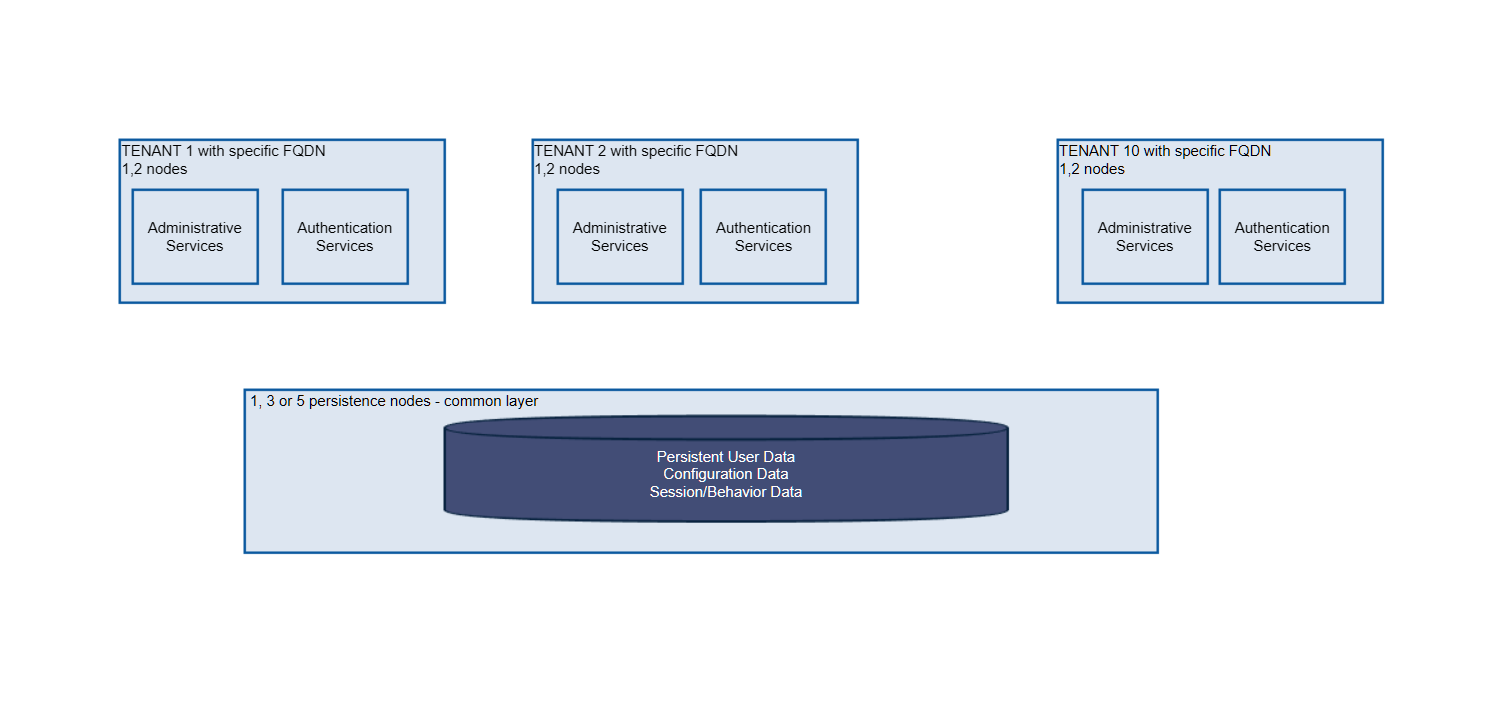
Our multi-tenancy architecture provides isolation and dedicated resources for each client while sharing common infrastructure:
-
Shared Persistence Layer: A single, robust persistence layer will be shared across all tenants, optimizing data storage and retrieval.
-
Dedicated Application Servers: Each tenant will benefit from one or two dedicated application servers, ensuring consistent performance and resource allocation.
-
Isolated Data Schemas: To maintain data integrity and separation, each tenant will have its own dedicated database, Elasticsearch, and ZooKeeper schema.
-
Tenant-Specific Configurations: Every tenant can have its own unique configuration, allowing for tailored settings and operational policies.
-
Flexible Application Versions: Tenants can even run different application versions, providing greater flexibility for updates and deployments.We're excited to announce that Veridium now supports multi-tenancy, allowing organizations to manage multiple client environments from a single Veridium deployment. This feature is ideal for small to medium-sized clients, offering flexibility and efficient resource management.